Begging and a dancer: two views of society
BALI ISLAND / CURATORIAL RESEARCH
Begging, a fan dancer and a fishing village bring different social histories into the exhibition’s tropical imagery.
See Cheen Tee · woodcuts · public memory
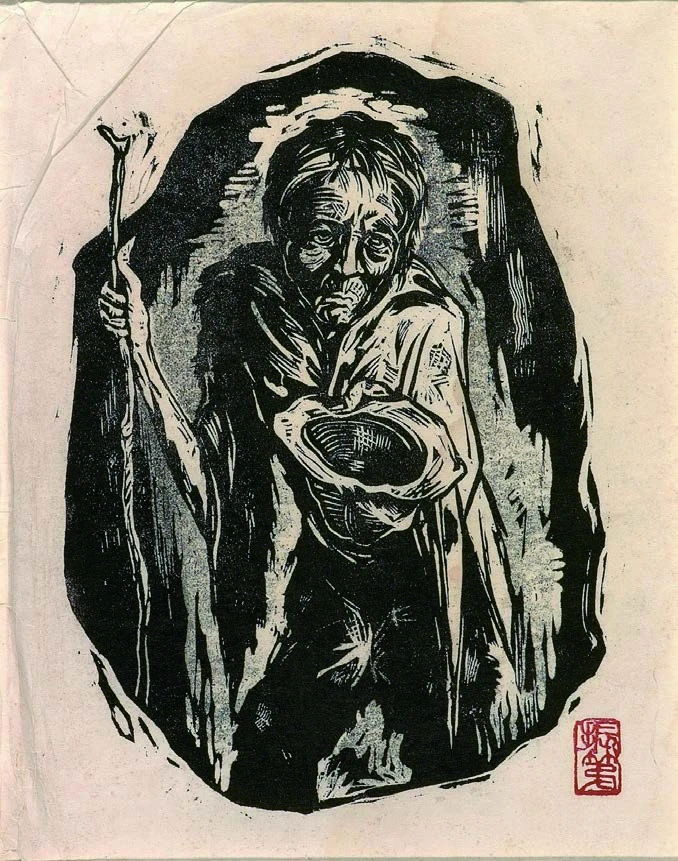
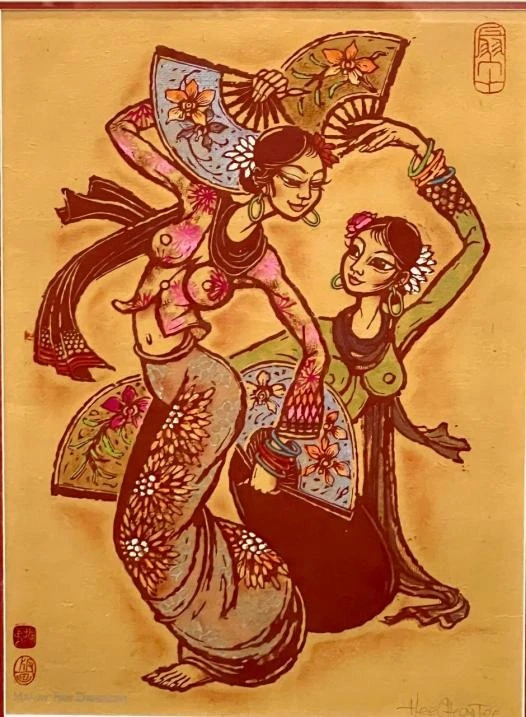
See Cheen Tee’s Begging, made in 1954, brings poverty into view through the direct language of woodcut. His colour prints of dancers and Sentosa’s fishing village extend that attention to cultural life and everyday surroundings. The catalogue relates his practice to the influence of China’s modern woodcut movement in Singapore and Malaya.
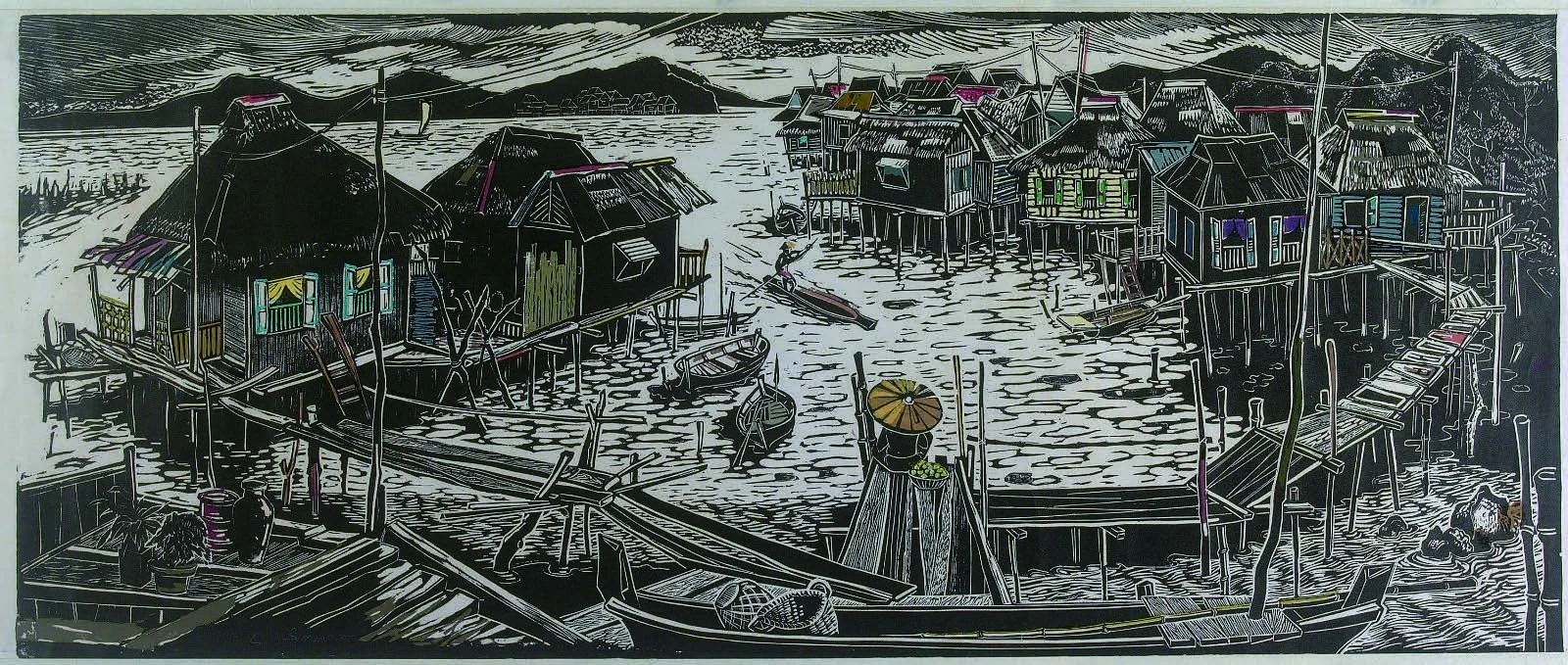
The works span years of political and social change, but their subjects resist a single picturesque account of the region. Sentosa Island, dated 1966, records a fishing settlement before the island’s later development as a resort. Seen together, the prints preserve aspects of public life that can disappear from a landscape’s familiar contemporary image.
These groupings follow the image comparisons in GAFA Art Museum’s e-flux announcement. Images, dates and collection credits are checked against the exhibition catalogue. View the e-flux announcement ↗
CONNECTED RESEARCH